How I Made My First $1,000 Online (Real Breakdown)
A transparent case study: what I sold, how I marketed it, and the dumb mistakes you can skip.
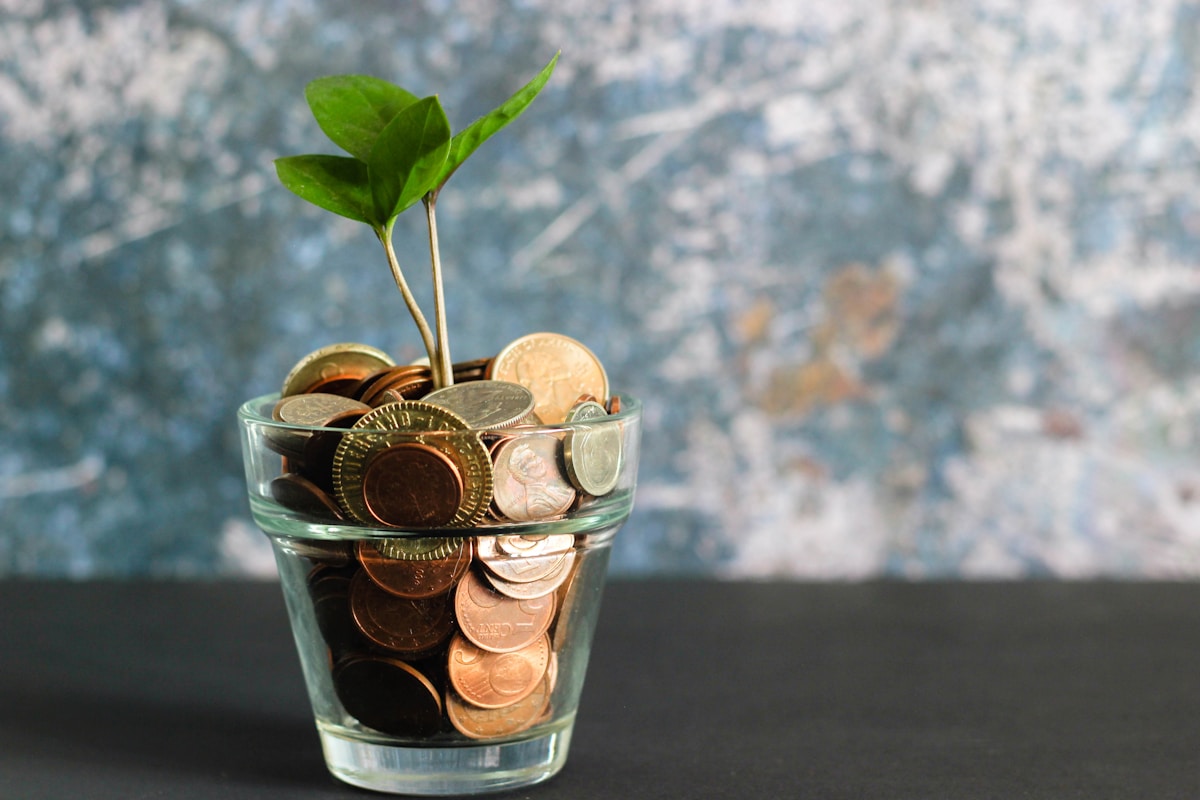
Everyone shows you the screenshots of $50K months. Almost nobody shows you the messy first $1,000. So here it is, in painful detail, no rounded numbers, no after-the-fact glamour. The exact week-by-week of how I made my first thousand dollars on the internet.
Spoiler: it took 11 weeks, not 11 days. I tried three things before something worked. And the moment I crossed $1K was so anticlimactic I almost missed it.
But it changed everything.
The setup: where I was starting from
Day job: marketing coordinator, $52K/year, salty about it.
Free time: maybe 2 hours on weeknights and 6 hours on Saturdays. Sunday was for the soul (or, in practice, anxiety scrolling).
Skills: I could write decently, knew Photoshop, and had spent a year running ads at my day job for our boring B2B product.
Money to invest: $400. That's it. I gave myself $400 and three months. If I didn't crack $1K in revenue I was supposed to "get serious" about my career.
What I tried first that didn't work (weeks 1-4)
**Attempt #1: Print on Demand T-shirts.** I designed 30 shirts on Printful with motivational quotes for runners. Spent $80 on Pinterest ads. Sold three shirts in three weeks. Net loss: $54.
**Lesson:** I wasn't a runner, I didn't follow the running community, and I had no idea what running shirts people actually wanted. Selling to a niche you don't belong to is a slow, expensive way to learn nothing.
**Attempt #2: Dropshipping a kitchen gadget.** Saw a viral TikTok of a "magic" garlic press. Set up a Shopify store. Spent $120 on TikTok ads. Got 4 sales, total revenue $96, refunds because the supplier shipping was 6 weeks. Net loss: $182.
**Lesson:** Drop shipping a generic product against a million other dropshippers when you have $200 to your name is mathematical suicide. The people winning at it have $50K ad budgets and inventory.
I was now at -$236 with 8 weeks left. Time to stop being clever.
What actually worked (weeks 5-11)
I went back to what I actually knew: writing and Facebook Ads. Not for myself, for a small business that already had revenue.
I made a list of 40 local businesses in my city — restaurants, gyms, dentists, a candle shop, a tattoo parlor. The kind of places that have a website that hasn't been updated since 2019.
For each one I wrote a short, specific email. Not "I do digital marketing." Something like:
> "Hey [name], I noticed your Facebook page hasn't posted since March. I help local gyms get 8-15 trial sign-ups a month for under $300 in ads. Would you be open to a 15-minute call this week to see if it'd work for you? Happy to share a free audit either way."
I sent 40 of those over 4 evenings. Got 6 replies. Got 2 calls. Closed 1 client.
The first client
A pilates studio. The owner was burned out from doing her own marketing. We agreed: $400/month for 30 days, I'd run her Facebook lead ads and write 4 posts a week. She'd handle everything that walked in the door.
That single deal was 40% of my $1,000 goal. In one conversation.
Adding two more clients
After the pilates studio, I had a tiny case study. Just a screenshot of "I generated 11 leads in 14 days for under $200." I went back to my list of cold emails and replied to the 4 that had said "not right now."
Two of them came back with "actually, send me your case study." One of them — a chiropractor — became client #2 at $500/month.
A friend of a friend heard I was doing this and asked if I could just teach them how. I quoted $250 for a one-time setup call and a custom playbook. They paid the same day.
That was it. $400 + $500 + $250 = $1,150. I crossed $1K on a random Tuesday in week 11, sitting in my car after my day job, refreshing Stripe.
The numbers everyone leaves out
- Time spent total: roughly 130 hours over 11 weeks
- Hourly rate during this period: $8.85
- Total spent on tools/ads: $236 in losses + $40 on Canva and a domain
- Money in pocket after taxes: about $850
This is what nobody tells you. The first $1K is brutal economics. You will work for less than minimum wage. The point is **proving the model**, not maximizing the dollars.
What changed after the first $1K
Three things happened that I didn't expect:
**1. I stopped feeling like a fraud.** Before $1K, every "online business" thought felt like cope. After $1K, I had proof I could exchange skill for money outside my job. That belief compounds.
**2. The work got easier.** Going from $0 to $1K is the hardest math you'll ever do online. Going from $1K to $5K took me 3 months. Going from $5K to $10K took 6 weeks. The system existed; I just turned the dials.
**3. My day job got worse.** Once you know you can pay rent without your boss, the boss becomes unbearable. This is when the runway plan from the Quit-Your-9-to-5 Blueprint becomes essential.
What I'd do differently
If I were starting over today, with the exact same skills and budget:
- Skip the Printful and Shopify experiments entirely. Don't try to sell physical products with $400.
- Go straight to the cold email outreach in week 1.
- Charge more from the start. $400/month was undercharging by half.
- Pick an even narrower niche (e.g., "Facebook ads for pilates studios") so the case study compounds faster.
- Use Loom videos in cold outreach — replies went up 3x once I started.
The hidden lesson nobody talks about
The first $1K isn't really about money. It's a tax you pay to find out which of your online business ideas survives contact with reality. Most people pay this tax slowly over years by jumping between models. I paid mine in 11 brutal weeks and never had to wonder again.
You will pay it too. The only question is whether you pay it now, on purpose, with a deadline — or whether you pay it over the next decade in regret about the thing you never started.
What to do this week
Pick the smallest possible version of the income stream you've been thinking about. Not the empire. The first transaction. Then go find one paying customer for it. Cold email. DM. Friend of a friend. Just one.
You don't need a brand. You don't need a logo. You don't need a course. You need one person to send you money for solving one problem. After that, it's just repetition.
The first $1K isn't the prize. The proof is the prize. Go get yours.